New French Claret: How Bordeaux's Great Red Wines Were Born

On 10 April 1663, in a London tavern, Samuel Pepys tasted a French wine that took him by surprise. It was called Ho Bryan, an English rendering of Haut-Brion. The celebrated diarist recorded a distinctive taste unlike anything he had encountered before.

His account marks a turning point in the history of Bordeaux wine. For centuries Bordeaux had exported clarets to England that were generally pale and drunk young. From the seventeenth century onwards, some estates began making darker, more structured red wines that could age for several years.
This new style, known on the British market as New French Claret, marked the birth of the great wines of modern Bordeaux. It changed winemaking methods, drinking habits and the value placed on wine estates.
But which grape varieties did growers cultivate at the time? Why did the Médoc and the Graves become increasingly important? And what might an eighteenth-century Bordeaux actually have tasted like?
1. From Medieval Claret to New French Claret: A Revolution in Taste
A New Wine for New Consumers
Since the Middle Ages, claret had been one of the defining products of trade between Bordeaux and England. Generally pale and relatively lightly extracted, it was often sold soon after the harvest.
From the seventeenth century onwards, part of the market began to change. Wealthier consumers sought wines that would keep better, develop with age and carry the prestige of a recognised origin.
This demand was part of a wider shift in European trade. Dutch merchants came to play a central role in the trade in wine and brandy. Their networks linked Bordeaux to northern Europe and the Atlantic markets.
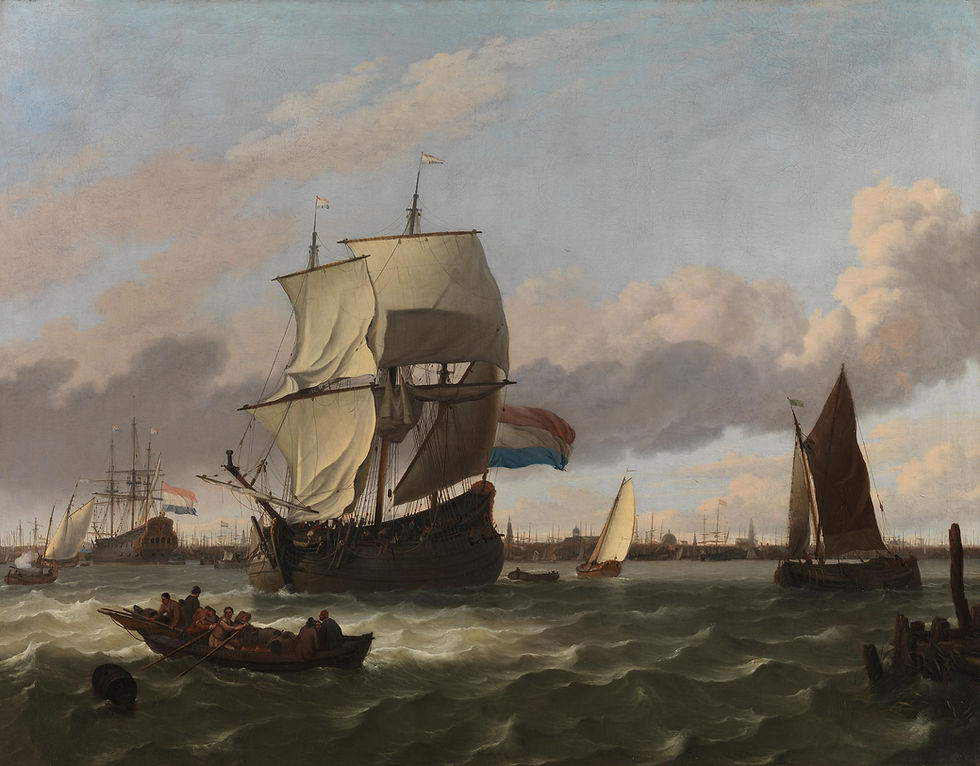
They also helped spread practices that improved preservation, notably the use of sulphur wicks to treat barrels. Combined with racking and topping up, these techniques helped protect some wines from spoilage.
The change took place over generations. Age-worthy Bordeaux emerged from a succession of technical and commercial innovations, each developing over time.
More Colour, More Tannins and Greater Ageing Potential
The main difference from medieval clarets lay in the style winemakers sought. Longer maceration extracted more colour and phenolic compounds from the grapes, particularly tannins.
This could give the wine a firmer structure. When the wine was properly made and stored, that structure helped it develop over the years.
Improvements in barrel maintenance and the preservation of wine in cork-sealed bottles accompanied this change. Yet systematic estate bottling did not yet exist. Merchants continued to play a major role in maturation, transport and sales.
It would be anachronistic to imagine a great Bordeaux wine of 1680 being made in exactly the same way as one today. Preservation techniques were improving, but methods and sanitary conditions were still very different.
2. Haut-Brion and the Pontac Family: Pioneers of a New Bordeaux
1660: An Estate Wine at the English King’s Table
At Pessac, on the gravel soils just outside Bordeaux, the Pontac family had been developing the Haut-Brion estate since the sixteenth century.
By the middle of the seventeenth century, Arnaud III de Pontac was helping establish a red wine whose style and reputation set it apart from ordinary clarets. A remarkable document attests to this early recognition: in 1660–1661, the cellar accounts of Charles II of England record a consignment of 169 bottles of Haut-Brion.
The significance of the reference goes beyond royal prestige. The wine was now identified by the name of a particular estate. A commercial reputation was taking shape around a property as well as around the wider name of Bordeaux.
1663: Samuel Pepys Discovers a New Taste
On 10 April 1663, Samuel Pepys visited the Royal Oak tavern in Lombard Street, London. There he tasted a wine called Ho Bryan and noted that it had:
“a good and most particular taste that I never met with”.
In other words, it had a pleasant and particularly distinctive taste he had never encountered before.
The entry predates the modern tasting note. Pepys mentions neither blackcurrant nor cedar and gives no indication of the degree of extraction. Yet his surprise shows how distinctive some English consumers already found Haut-Brion.
In 1666, François-Auguste de Pontac, Arnaud’s son, opened Pontack’s Head in London. It became a favourite with affluent, educated Londoners. The estate’s success rested on a new combination: a recognisable wine, a distinctive style, a prestigious clientele and an effective commercial strategy.
1677: John Locke Takes an Interest in the Terroir of Haut-Brion
Another English observer left a particularly valuable account. On 14 May 1677, the philosopher John Locke visited the vineyards of Haut-Brion. He described a slight rise facing mainly west, with pale sandy soil mixed with gravel, apparently ill-suited to ordinary crops.
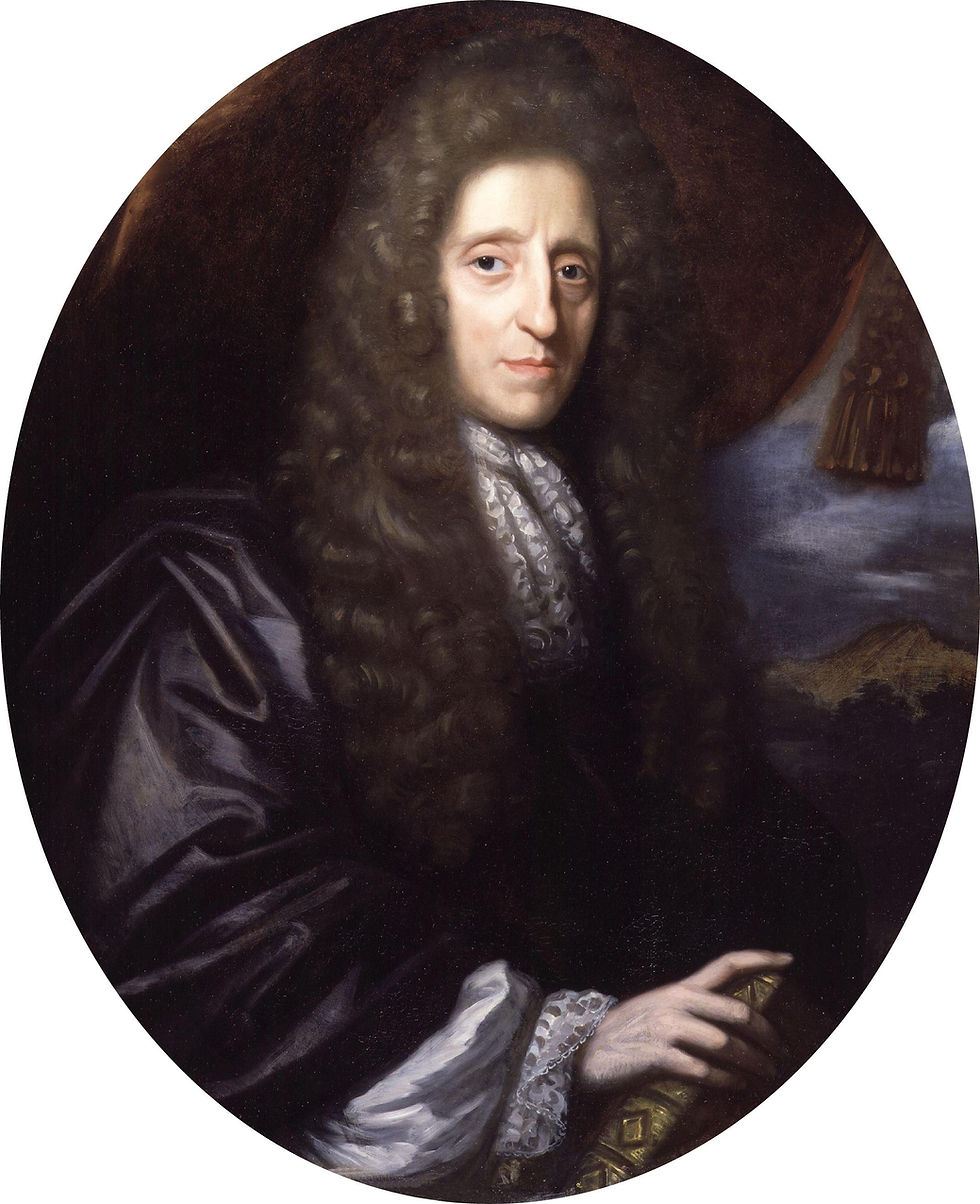
Locke also observed how the vines were trained on stakes or other supports. He considered the land’s yield and the high prices fetched by the wine.
The account is remarkable: the relationship between a place, its natural characteristics and a wine’s reputation was already attracting close observation. The text calls for care when read through modern categories. In a 2025 study, Charlie Leary notes that Locke believed some of the wine sold by the Pontacs may have come from beyond the plot he visited.
This leaves Haut-Brion’s historical importance intact and reminds us that today’s notions of estate ownership, traceability and controlled origin had yet to take their present form.
Haut-Brion was a major pioneer, although the transformation of red Bordeaux cannot be attributed to a single estate.
3. Which Grape Varieties Went into the Great Bordeaux Wines of the Eighteenth Century?
This is one of the most striking differences between the vineyards of that period and those of today.
Today we associate Bordeaux with Merlot, Cabernet Sauvignon and Cabernet Franc. Yet the mix of grape varieties planted in eighteenth-century Bordeaux was quite different, and Merlot had yet to achieve its present dominance.
The Cabernets, Côt and Petit Verdot: The Leading Varieties
By the end of the eighteenth century, the Cabernets, Côt, also known as Malbec, and Petit Verdot were among the main red grape varieties in Bordeaux.
Côt then played a much larger role than it does today. In the region’s history it is associated with the name Noir de Pressac. It could produce deeply coloured, structured wines and was widely planted, although we cannot say precisely how much each leading estate grew.
Cabernet Franc, called Bouchet in the Libournais, was also part of this historic mix of varieties. Cabernet Sauvignon gradually found a particularly favourable home on some of the gravel soils of the Médoc and the Graves, while Petit Verdot added to the range of wines produced.
Today’s blending proportions cannot safely be projected back onto the eighteenth century. The archives do not allow us to reconstruct the exact plantings of every estate.
What About Merlot?
The emblematic grape of Bordeaux’s Right Bank today, Merlot was still far from holding that position when New French Claret took shape in the seventeenth and eighteenth centuries. It appeared under that name in Bordeaux sources only in the late eighteenth century, when the Cabernets, Côt (Malbec) and other varieties were contributing to the diversity of the region’s vineyards.
Merlot’s expansion began in earnest in the nineteenth century and accelerated in the twentieth. It ripens earlier than Cabernet Sauvignon, a particular advantage in Bordeaux’s maritime climate. That and its suitability for the clay and limestone soils of Saint-Émilion, Pomerol and Fronsac gradually helped it thrive.
Merlot was never destined to become king of the Right Bank. Its present dominance is the result of two centuries of changing viticultural practices, shifts in vineyard plantings and decisions by growers. The Bordeaux of Louis XV and Louis XVI therefore relied on a mix of grape varieties quite different from the one we know today.
How did this once secondary grape become so important? For its history, origins and special affinity with Bordeaux’s terroirs, read Why Is Merlot King on Bordeaux’s Right Bank?
4. The Médoc, the Graves and the Rise of the Great Growths
Vineyard Development and New Investment
In the seventeenth and eighteenth centuries, the Médoc underwent a profound transformation. Drainage, land improvement and investment by landowners encouraged the spread of vines, particularly on the gravel terraces best suited to them.
The leading estates gradually sought out plots that would favour ripening and yield wines of distinction. Gravel soils mattered for their drainage, thermal properties and effect on the vines’ water supply. These characteristics can help relatively late-ripening varieties such as Cabernet Sauvignon reach maturity.
Terroir was therefore a decisive factor, though it alone cannot explain the commercial success of these wines. Winemaking techniques, investment, the wine trade and the reputation of estate owners also helped bring the great growths into being.
1707: Château Names Become Recognisable in London
By the early eighteenth century, wines from some estates were already well known far beyond Bordeaux. In a study published in 1974, the historian René Pijassou examined advertisements for wine sales in the London press between 1702 and 1711.
An advertisement in the London Gazette dated 22 May 1707 mentions New French Clarets from Lafite, Margaux and Latour. Haut-Brion appears in other advertisements from the period.
These records are telling: merchants were selling not just Bordeaux wine, but wines identified by their individual growths and valued for their quality and market price. Some fetched considerably more than ordinary clarets. The estates were famous long before the 1855 Classification, which formalised a commercial hierarchy that had already existed for generations.
5. Thomas Jefferson in 1787: The Golden Age of Wines Made to Age

A century after Samuel Pepys tasted Haut-Brion, another observer helps us measure how far the great Bordeaux wines had come. In 1787, Thomas Jefferson, then an American diplomat in France and future president of the United States, took a close interest in the vineyards of Bordeaux. In his notes and correspondence he singled out four estates for their red wines: Margaux, Latour, Haut-Brion and Lafite.
But his most revealing observation concerned ageing. In a letter dated 6 May 1787, Jefferson estimated that the wines of Margaux, Latour and Haut-Brion reached their full potential at about four years, while Lafite could be enjoyed after about three.
This observation matters. Medieval claret was generally meant to be sold and drunk quickly. By the end of the eighteenth century, some great growths were prized for their ability to develop over several years.
Time had become part of the quality and value of the wine. Jefferson’s account should be applied with care to Bordeaux as a whole. He was describing a handful of prestigious growths, whereas most people drank ordinary wines.
What Might a Great Bordeaux of the Period Have Tasted Like?
Historical accounts suggest wines that were deeper in colour, more structured and better suited to ageing than medieval clarets. Their exact aromas remain impossible to reconstruct. Grape varieties, ripeness levels, fermentation conditions, vessels and maturation practices all differed from those of today.
It would therefore be misleading to assume that a Haut-Brion from 1784 had the blackcurrant, cedar or vanilla notes sometimes associated with great Bordeaux wines today.
What we do know is more interesting: consumers had come to recognise that some wines gained complexity and harmony after several years. This idea became one of the foundations of the reputation of the great wines of Bordeaux.
6. Eighteenth-Century Bordeaux: The Many Faces of Prosperity
The rise of the great growths coincided with a period of remarkable expansion for the port of Bordeaux. Trade with Europe continued as Atlantic and colonial trade grew in importance.
The monumental façades, quays and grand squares that still give Bordeaux its character bear witness to this prosperity.

This wealth also had a tragic dimension that belongs in any accurate account of the period. A substantial share of colonial trade involved sugar, coffee, indigo, cotton and other goods produced by the forced labour of enslaved people. Bordeaux shipowners also took a direct part in the transatlantic slave trade.
According to the Musée d’Aquitaine, around 480 slave-trading voyages organised from Bordeaux led to the forced deportation of 120,000 to 150,000 Africans between the seventeenth and nineteenth centuries.
The growth of fine winemaking and of the economy built on slavery should be understood as distinct developments, without reducing them to a single cause and effect. Both belong to the history of the same port and its trade.
Bordeaux’s economic golden age was also the age of a colonial trade built partly on human exploitation. Understanding the eighteenth century means considering both realities together.
Conclusion: How Modern Bordeaux Was Born
From the mid-seventeenth to the late eighteenth century, Bordeaux underwent a profound transformation. Better preservation, changes in winemaking, the influence of merchants and changing tastes encouraged the emergence of red wines that were deeper in colour, more structured and capable of ageing.
Haut-Brion and the Pontac family helped establish this new style on the English market. Other leading estates, particularly in the Médoc, gradually built their own reputations and commercial identities.
The wines of the period still differed from those we know today. The mix of grape varieties was different, Merlot had yet to become dominant and winemaking practices continued to evolve.
From Samuel Pepys discovering Haut-Brion in 1663 to Thomas Jefferson assessing the maturity of the leading growths in 1787, we see a new wine culture taking shape, in which origin, ageing and an estate’s reputation became essential.
Modern Bordeaux grew out of centuries of change in viticulture, winemaking and trade, with many grape varieties and innovations contributing to its development.
This third article concludes our journey through the history of Bordeaux wines, from the amphorae of Burdigala and medieval claret to the great growths of the Enlightenment.
To follow the main stages of this transformation, explore the first two articles in the series:
The Origins of Bordeaux Wine: Biturica, Roman Amphorae and the Taste of Ancient Wine — Go back to the first vineyards of Burdigala and discover how viticulture took root in Aquitaine under the Roman Empire.
Bordeaux Under the Plantagenets: Claret, Vineyards and the Privilege of Wine — Explore the golden age of the wine trade with England and the origins of Bordeaux’s prominence as a wine region in the Middle Ages.
Historical and Scientific Sources
Samuel Pepys (1663). Diary, entry for 10 April 1663. https://en.wikisource.org/wiki/Diary_of_Samuel_Pepys/1663/April
John Locke (1677). Travel journal, visit to Haut-Brion on 14 May 1677. Reproduced in Lord King, The Life of John Locke, 1829.
Thomas Jefferson (1787). Letter to M. Guide, 6 May 1787, on Bordeaux’s leading growths and how they aged.
René Pijassou (1974). “Le marché de Londres et la naissance des grands crus médocains (fin XVIIe siècle-début XVIIIe siècle)”. Revue historique de Bordeaux, 23, pp. 139–150. https://doi.org/10.3406/rhbg.1974.2035
Henri Enjalbert (1978). Histoire de la vigne et du vin : la naissance des grands vins et la formation du vignoble moderne de Bordeaux, 1647-1767.
Charlie Leary (2025). “Making a shift at Haut-Brion: John Locke’s journal, Claret terroir, artifice, authenticity, and branding”. Journal of Wine Research, 36(2), pp. 126–138. https://doi.org/10.1080/09571264.2025.2463110
Meloni and Swinnen (2024). “The creation of a wine entrepôt in 18th-century Boulogne-sur-Mer”. Journal of Wine Economics. https://www.cambridge.org/core/journals/journal-of-wine-economics/article/creation-of-a-wine-entrepot-in-18thcentury-boulognesurmer-dedicated-commodity-chain-politics-and-enlightenment-economists/55401414B408C9CC084006EF57D837BF
INAO. Historical notes in the AOC Bordeaux product specification, section on grape varieties and winemaking practices.
Musée d’Aquitaine. “Bordeaux au XVIIIe siècle : le commerce atlantique et l’esclavage”. https://www.musee-aquitaine-bordeaux.fr/


Comments